-
Using quantum state discrimination as a guiding example, Marco Túlio Quintino will introduce SDP from its core definition: an optimization problem over a convex set. He will demonstrate how, despite its apparently simple formulation, SDP captures structures that arise naturally in quantum theory. The session will then cover the concept of the dual problem, offering a different mathematical perspective and enabling the derivation of rigorous upper and lower bounds. Marco will conclude by discussing how problems framed as SDPs can be solved efficiently using computational algorithms, highlighting the potential for computer-assisted proofs.
His Lectures will be structured as follows :Introduction to SDP via quantum state discrimination.
The primal problem, dual problem, and strong duality.
SDP as a computational tool and computer-assisted proofs.
-
Jessica Bavaresco will build upon this foundation by examining how these tools can solve quantum information problems that may not appear tractable via SDP at first glance. She will detail how to detect quantum entanglement using a converging hierarchy of SDPs based on symmetric extensions. Then, Jessica will explain how quantum channel discrimination, Bayesian metrology, and the diamond norm can be framed as SDPs. In the following, Jessica will show how to detect and quantify measurement incompatibility and other forms of quantum correlations. Finally, motivated by the search for the most incompatible measurements, she will present a see-saw method based on primal and dual formulations to tackle a class of non-linear problems common to different fields of quantum information.
Her lectures will be structured as follows :Entanglement detection and quantification via an SDP hierarchy of symmetric extensions.
Quantum channel discrimination, Bayesian metrology, and the diamond norm via SDP.
Measurement incompatibility and quantum correlations via SDP.
See-saw methods based on primal and dual formulations to analyse non-linear problems.
-
Prof. Paternostro will begin by introducing us to the key concepts of quantum thermodynamics followed by a guided tour of their application in the world of quantum optomechanics.
His lecture will be structured in the following way :Introduction to Quantum Thermodynamics
Introduction to Quantum Optomechanics
Thermodynamics in Optomechanical Settings.
-
Dr. Perarnau Llobet will continue our tour of the quantum thermodynamic world and introduce its deep connections with computation. We will first consider the emblematic case of information erasure, showing how Landauer's principle sets a fundamental bound on the energetic cost of computation. From this, we will consider recent proposals of computation based on quantum thermal machines and non-equilibrium steady states, providing an introduction to the growing field of thermodynamic computing.
His lectures will be structured in the following way :Thermodynamics of erasing a bit of information
A model of a perceptron based on quantum thermal machines
Thermodynamic networks: Computing with non-equilibrium steady states
-
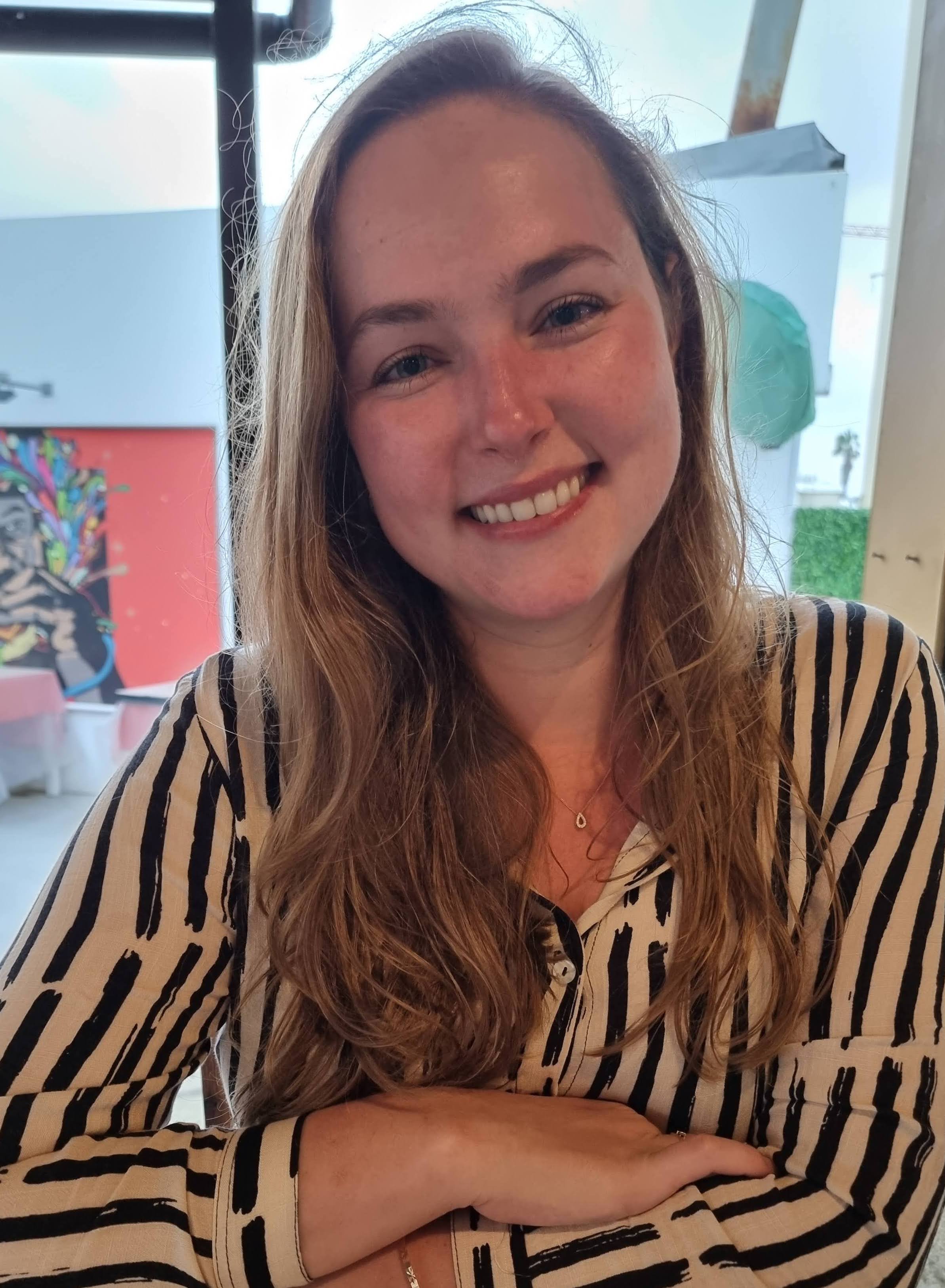
Dr. Capel will outline the basics of Gibbs sampling algorithms, with a special focus on dissipative schemes described by Lindbladians, and on the various methods of giving convergence guarantees to their steady states. She will present the current state-of-the-art of mixing times for Davies Lindbladians associated with commuting Hamiltonians.
Her lectures will have the following programme :
Lecture 1 : Basics of Gibbs sampling and schemes based on quantum phase estimation, quantum Metropolis sampling, dissipation, dualities, decoded quantum interferometry, etc.Lecture 2 : Lindbladians and open quantum system basics. Quantum detailed balance. Rapid mixing and fast mixing of the evolution. Convergence guarantees based on the gap, and on static properties of decay of correlations on the Gibbs state. Gibbs samplers for commuting models.
-
Dr. Alhambra will cover different families of Lindbladians and quantum algorithms including modern ones based on different quantum generalizations of the important notion of detailed balance and their relation to standard open system approximations. He will also cover the basics of near-term schemes based on collision models, and sketch current experimental prospects.
Lecture 3 : Generalizations of quantum detailed balance and Gibbs sampling for non-commuting models. Breakdown of the secular approximation. The CKG Lindbladian, quasi-locality and Lieb-Robinson bounds. Efficiency guarantees for fault-tolerant Gibbs Sampling.Lecture 4 : Examples of near-term dissipative state preparation. Gibbs sampling or near-term experiments and the framework of collision models. The Lamb shift problem and sketch of efficiency guarantees.
Semidefinite Programming as an Analytical and Computational Tool for Quantum Information
In this track, we will explore how semidefinite programming (SDP) serves as a powerful analytical and numerical tool across various branches of quantum information theory.
Introduction to Quantum Thermodynamics & Physics of Computation
In this track you will discover how the physics of energy transfer is different in quantum settings, learning how to think about work, heat and entropy production in the quantum world.
Quantum Gibbs Sampling: Basics and Algorithm
In this course, we will cover the main existing ideas about how we describe mathematically and simulate with quantum computers the process of thermalization, in which physical systems equilibrate with their external environments to the Gibbs state. By simulating efficiently the environment in a quantum computer, these processes can be used to prepare Gibbs states.
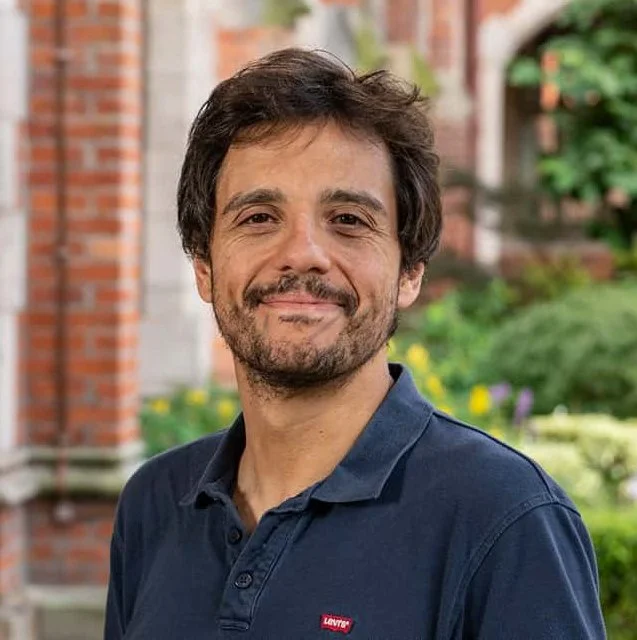
Mauro Paternostro
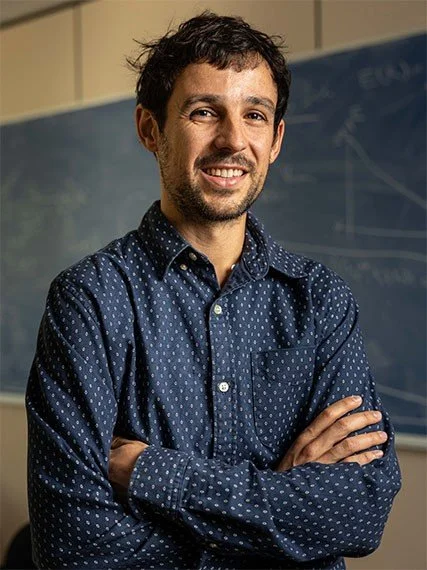
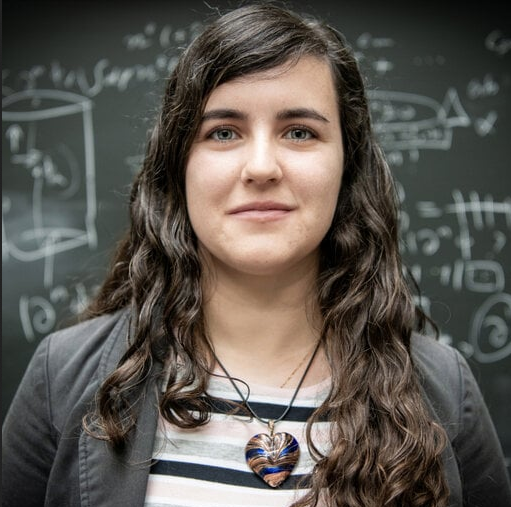
Angela Capel
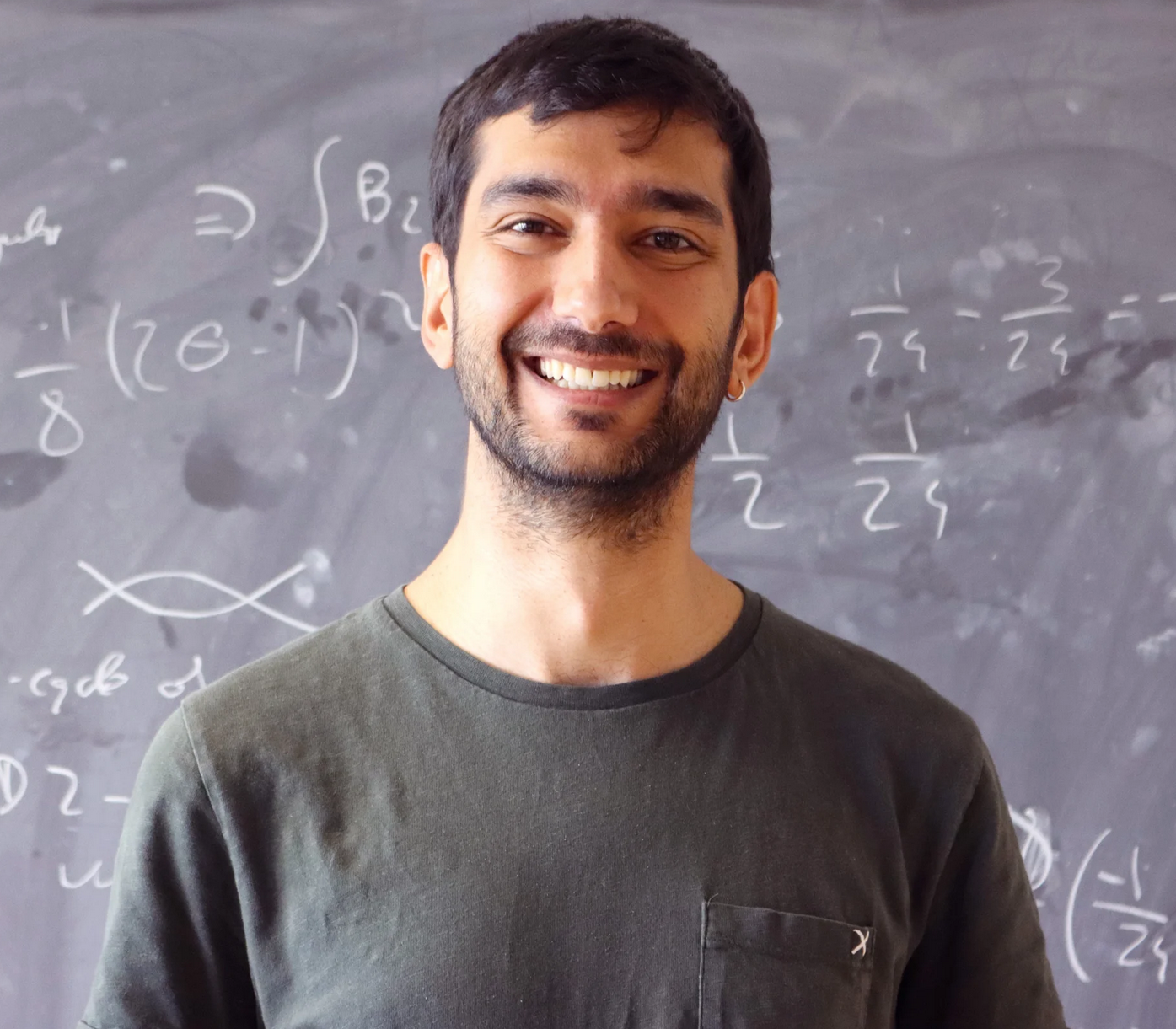
Alvaro M. Alhambra
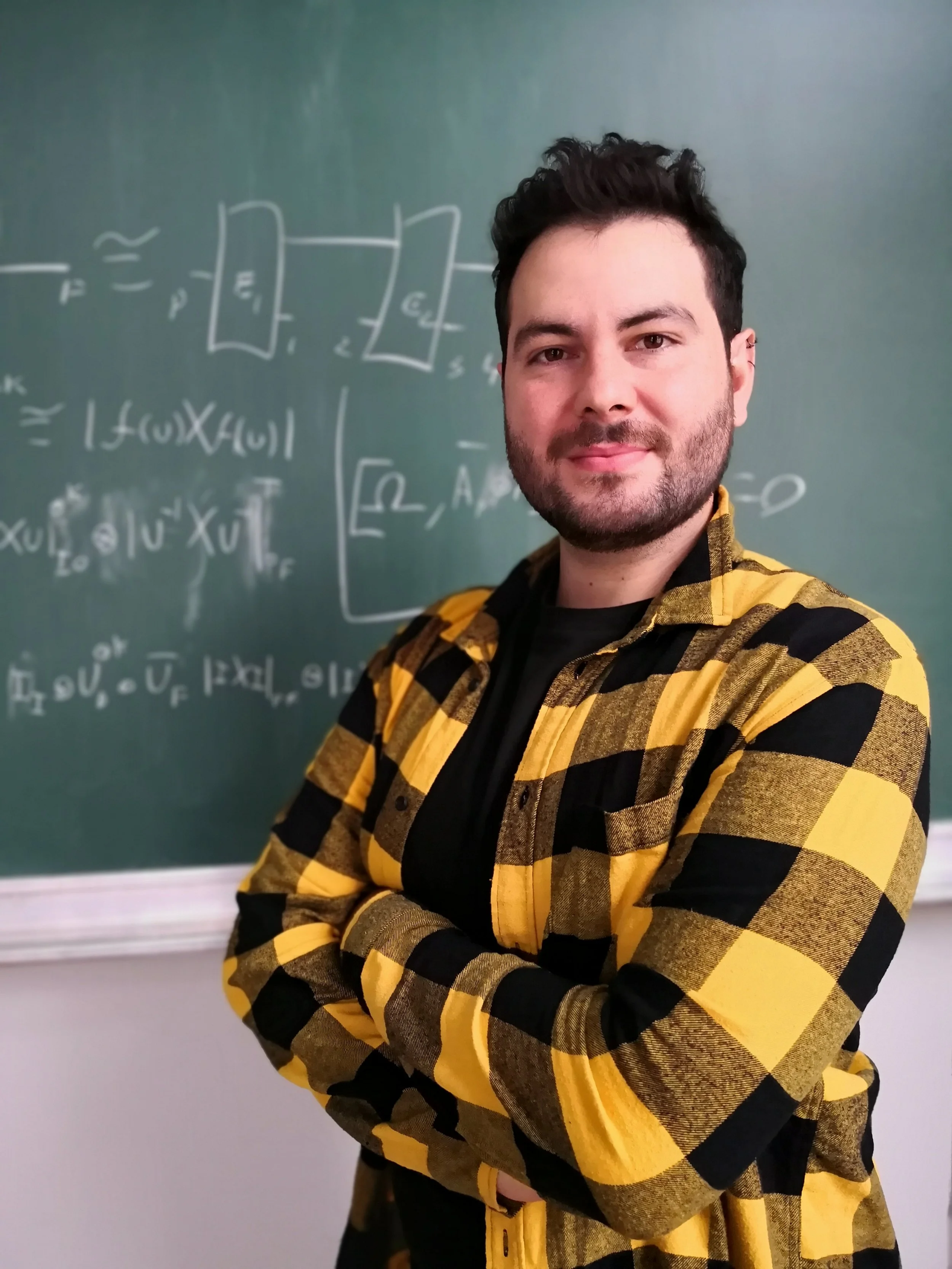
Marco Túlio Quintino
Jessica Bavaresco
Martí Perarnau-Llobet