-
Before learning about the incredible advantages quantum algorithms offer over classical algorithms in this Basic Track, we must understand the different physics which lead to these advantages. Classical Computers are limited by Classical Physics whilst Quantum Computers enjoy the various fascinating phenomena of Quantum Physics. In these two lectures we will immerse ourselves in the probabilistic nature of quantum mechanics. Arming ourselves with the basic ideas we will need to understand the quantum computing concepts we will meet in the rest of the basics track.
What you can expect from these lectures:
Learn the fundamentals of QM (density matrices, observables, Pauli algebra).
Understand how classical computing differs from quantum computing.
What makes a qubit?
This track will introduce you to the basics needed to understand quantum computing.
-
Having understood why quantum mechanics makes probability more fun, it's time to put that to use! In these sessions we will explore 3 of the most seminal algorithms that leverage quantum physics and lead to appreciable complexity advantages over classical algorithms.
These session will be based on these notes : https://jakexuereb.com/qcomp_notes_24.pdf
-The Deutsch - Jozsa Algorithm
- Grover’s Algorithm
- Quantum Fourier Transform & Quantum Phase Estimation -
These lectures introduce variational quantum algorithms (VQAs), which leverage both quantum and classical resources to solve optimization problems. It opens with the background needed to motivate them: a brief primer on computational complexity, the limitations of noisy intermediate-scale quantum devices, and the four modules that make up any variational algorithm: the objective function, the parameterized quantum circuit, the measurement technique, and the classical optimiser. These ideas are then put into practice with the variational quantum eigensolver, determining the ground-state energy of the hydrogen molecule and benchmarking it against exact diagonalisation.
The second half turns to the other founding member of the family, the quantum approximate optimisation algorithm, applied to Max-Cut on a small graph: participants encode a combinatorial problem into a cost Hamiltonian, build the alternating cost and mixing layers explicitly, and recover the optimal cut, observing how solution quality improves with circuit depth. Time permitting, we will also touch on non-linear cost functions such as those arising in Gibbs state preparation, as well as other topics related to VQAs such as parameter-shift rules and barren plateaus, among other related topics.
-
Whenever quantum protocols face real world conditions, they are confronted with a common enemy: N̸̨̛̲͍͉̝͑̑͠͠o̶̧͇̓̇͘͘͝i̸͗̇s̵̻͛é̴̥̦. This issue is so prevalent that the current generation of quantum computers is called “Noisy Intermediate Scale Quantum” (NISQ) computers, and the challenge is to make them as functional as possible. We will look at error mitigation from two perspectives: the control view, in which the translation of circuits into physical operations is tweaked to compensate or avoid noise, and quantum error correction, which encodes information in larger subspaces to detect errors.
Her lectures will be structured as follows:
1. Noise and Control
Introduction of Noise for Qubits
Dynamical Decoupling
Pulse Shaping and Quantum Optimal Control
2. Quantum Error Correction
Basic Principles of Quantum Error Correction
The Stabiliser Formalism
Outlook
In this track, we will explore how noise affects modern quantum technology and how it is combated.
This track starts with a reminder of the probabilistic nature Quantum Physics and why it is different from Classical Physics.
Reacquainted with this knowledge we then follow a safari of different topics in Quantum Computation. From a brief primer of basic quantum algorithms, meeting variational quantum algorithms and lastly learning how to tame environmental noise which could prevent us from harnessing the powers of quantum computing.
The track closes by joining with the advanced track on Thursday and Friday for fascinating sessions on the use of Semi Definite Programming (a powerful optimisation technique) in Quantum Information.
Basics Track - A First Encounter with Quantum Computation
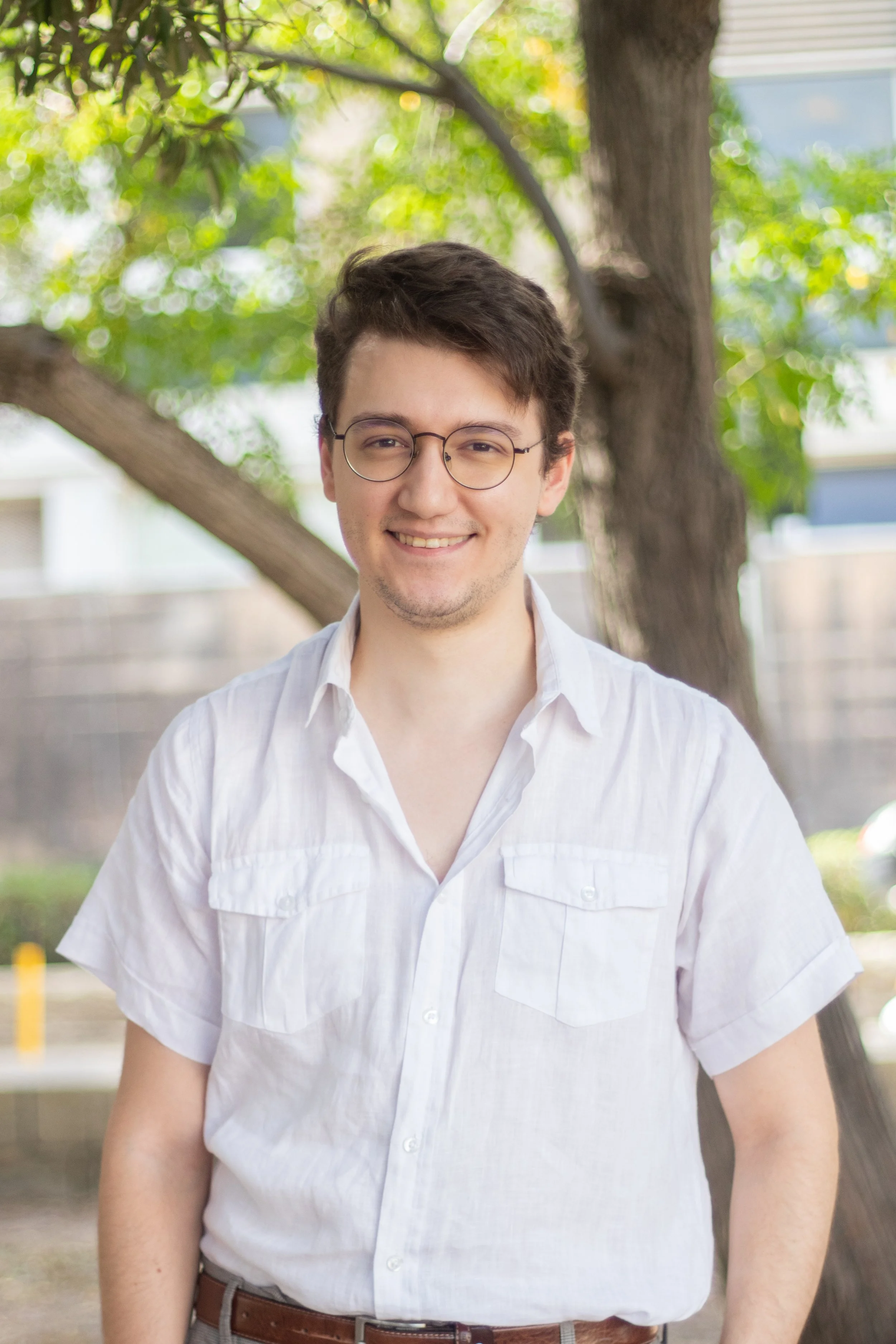
Mirko Consiglio
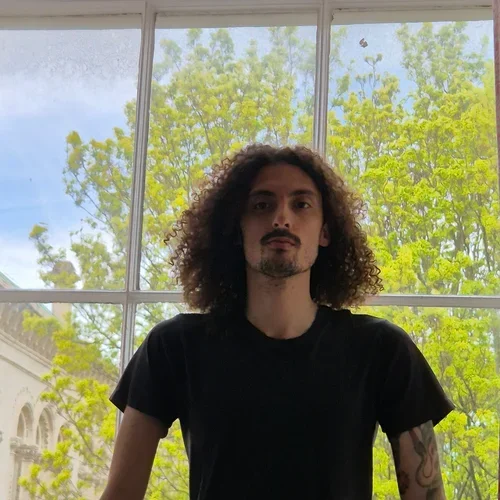
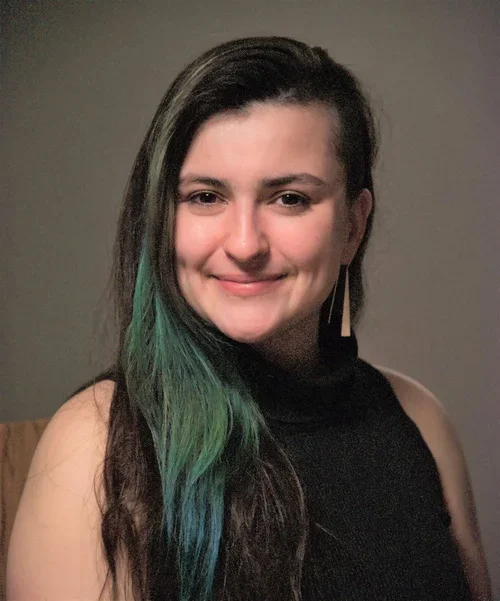
Phila Rembold


Jan Neuser
Marco Túlio Quintino
Jessica Bavaresco
Jake Xuereb